The Distributed Advantage: Why Remote-First Tech Companies Are Outcompeting Traditional Offices for Top Engineering Talent
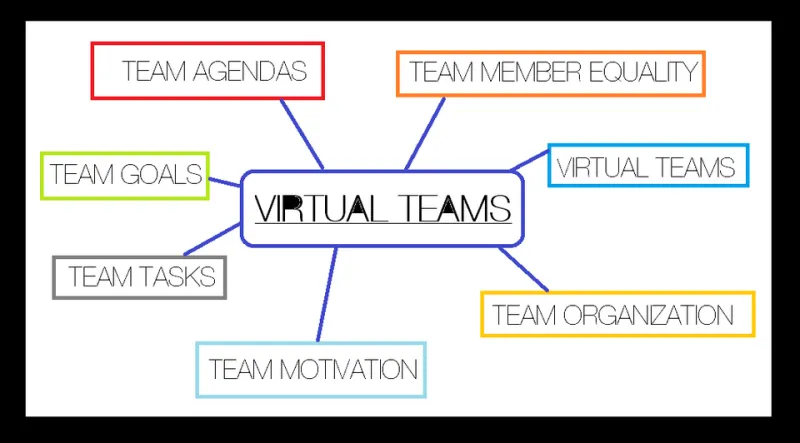
Photo: SmallGroupFall3315uhd, CC BY-SA 4.0, via Wikimedia Commons
Let us dispense with the premise that this is still a debate about employee preference. The data has settled that question. What remains genuinely contested — and what this piece argues with conviction — is whether distributed work represents a permanent structural shift in how technology companies build world-class teams, or whether the return-to-office mandates now proliferating across Silicon Valley and beyond represent a defensible long-term strategy.
The evidence, examined honestly, favors the former position. And for US technology companies still anchored to the assumption that physical proximity drives engineering excellence, that evidence carries significant competitive implications.
What the Numbers Actually Say
The narrative that remote work undermines productivity has been repeated confidently by a number of prominent technology executives in recent years. It has also been contradicted, repeatedly, by independent research.
A 2023 study published in Nature — examining more than 60,000 Microsoft employees over a two-year period — found that while remote work reduced certain forms of informal collaboration, it had no statistically significant negative effect on individual productivity metrics. A separate analysis by Stanford economist Nicholas Bloom, whose research on remote work spans more than a decade, found that hybrid and fully remote arrangements reduced employee attrition by approximately 35 percent without measurable productivity losses.
For US technology companies operating in a market where replacing a senior software engineer costs between 50 and 200 percent of annual salary, a 35 percent reduction in attrition is not a lifestyle benefit — it is a balance sheet item.
Furthermore, a 2024 survey by Hired.com found that 72 percent of software engineers in the United States ranked remote work flexibility as either the first or second most important factor in evaluating a new position — ranking above compensation for a meaningful segment of respondents. Companies enforcing five-day office attendance policies are not simply inconveniencing their existing workforce; they are systematically narrowing their recruiting pipeline.
The Figma Model: Engineering Excellence Without a Headquarters Mentality
Figma, the collaborative design platform acquired by Adobe in a deal valued at $20 billion, built much of its engineering organization on distributed principles long before the pandemic normalized remote work. The company's approach was not incidental — it was architectural. Engineering managers were evaluated in part on their ability to communicate asynchronously, documentation was treated as a first-class engineering artifact, and meeting culture was designed to accommodate team members across multiple time zones.
The results speak to a broader pattern. Figma was able to recruit senior engineering talent from cities including Austin, Denver, and Raleigh — markets that offer meaningfully lower costs of living than San Francisco — without sacrificing the caliber of candidates it attracted. In a labor market where the best engineers have optionality, the ability to offer geographic flexibility is a genuine differentiator.
Zapier and the Async-First Discipline
Zapier, the workflow automation platform that has operated as a fully remote company since its founding in 2011, offers perhaps the most mature example of distributed engineering culture in the US technology sector. With a team distributed across more than 40 countries and no physical headquarters, Zapier has built an operational model that treats asynchronous communication not as a constraint to work around but as a structural advantage.
The company's internal documentation practices — including detailed written decision records, publicly accessible project logs, and structured meeting alternatives — mean that institutional knowledge is not concentrated in the heads of employees who happen to be in the same room. New hires onboard more efficiently. Context is preserved across team transitions. And engineering managers spend less time in status meetings and more time on work that compounds.
Zapier's engineering output per employee, by the company's own reporting, has consistently exceeded industry benchmarks. That is not despite its distributed structure — it is, in significant measure, because of it.
The Hidden Costs of Mandated Return
For legacy technology companies now issuing return-to-office mandates, the short-term optics of organizational discipline are being purchased at a price that does not always appear on the immediate balance sheet.
First, there is the attrition effect. Multiple US technology companies that announced mandatory return policies in 2023 and 2024 reported disproportionate departures among senior engineers — precisely the employees with the greatest market optionality. These individuals did not lack employment alternatives; they exercised them.
Second, there is the geographic constraint. A company requiring five-day office attendance in Seattle or San Francisco is competing for talent exclusively within commuting distance of those cities. A remote-first competitor is recruiting from the entire country — and, in many cases, globally. The talent pool differential is not marginal; it is orders of magnitude.
Third, and perhaps most significantly, there is the signal effect. For engineers evaluating employers, a rigid return-to-office policy communicates something specific about organizational culture: that management prioritizes visibility over output, that trust is conditional, and that employee autonomy is constrained. In a market where employer branding matters, that signal carries weight.
A Transition Roadmap for Legacy Organizations
For technology companies that built their cultures around physical office environments and are now seeking to compete more effectively for distributed talent, the following principles offer a practical starting point:
Redefine the Purpose of Physical Space. Rather than requiring attendance as a default, redesign office environments as resources for specific activities — complex collaborative design sessions, onboarding, and relationship-building — that genuinely benefit from in-person interaction. This preserves the value of physical space without mandating it universally.
Invest in Asynchronous Infrastructure. Distributed teams require better documentation, clearer decision-making processes, and more deliberate communication norms than co-located teams. This is not a limitation — it is an engineering discipline. Organizations that invest in async infrastructure typically find that it improves clarity and accountability across the entire organization.
Measure Output, Not Presence. Performance management systems designed around observable office attendance are poorly suited to distributed environments. Transitioning to output-based evaluation requires managerial retraining and clearer goal-setting frameworks, but the investment yields better performance data and stronger accountability.
Build Geographic Intentionality Into Recruiting. Remote-first recruiting requires deliberate outreach to talent markets beyond traditional technology hubs. Companies that build relationships with engineering communities in cities such as Columbus, Salt Lake City, and Raleigh-Durham will access talent pools that office-centric competitors are structurally unable to reach.
The Competitive Landscape Is Already Shifting
The technology talent market does not stand still while organizations deliberate. Remote-first companies are recruiting aggressively from the talent pools that return-to-office mandates are displacing, and they are doing so with compensation structures that increasingly reflect the cost-of-living adjustments that geographic flexibility enables.
The distributed model is not without its genuine challenges — maintaining culture at scale, managing performance across time zones, and preserving the spontaneous collaboration that physical proximity can facilitate all require deliberate organizational investment. But the evidence is clear that these challenges are manageable, and that the companies solving them are building engineering organizations that are, by measurable metrics, outperforming their office-centric counterparts in retention, recruiting breadth, and sustained output.
For US technology leaders, the question is no longer whether distributed work is viable. It is whether their organizations are willing to build the operational discipline required to make it work — before the talent gap becomes a competitive gap that is no longer closable.